 |
||
 |
 |
 |


The Desoto Mine, originally known as the Buster Copper Mine, was "discovered" in September 1875 when a rich copper outcropping was identified on the northern slope of a mountain in central Arizona. While the area had been prospected for nearly a decade prior, this discovery marked a turning point. It wasn’t simply the naming of a mine—it was the spark that set in motion a series of developments: serious mining efforts began, the site gradually took on the name “Desoto,” and infrastructure expanded as the operation grew more ambitious.
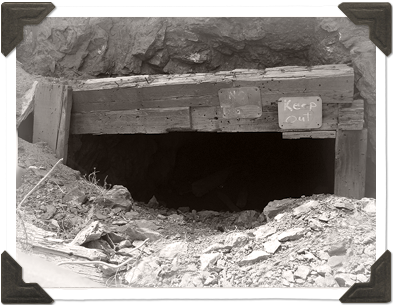
Early work was concentrated on the northern slope, but with the arrival of the Bradshaw Mountain Railroad in 1903, operations shifted to the southern side of the mountain. That same year, a tunnel was driven northward from the southern slope to intersect the ore body, and a new mining camp was established. This camp included an assay office, blacksmith shop, boarding house, cook house, corral, and two saloons nearby. To move ore efficiently from the tunnel’s mouth to the railroad, a 4,000-foot-long aerial tramway—manufactured by the Trenton Iron Works Company of New Jersey—was completed in April 1904. It had a daily capacity of 2,000 tons of ore.
By 1905, Frank Murphy, instrumental in constructing the Bradshaw Mountain Railroad, had joined the board of directors of the Arizona Smelting Company, which owned the Desoto Mine. Murphy had shown interest in the property as early as 1902, and his involvement reflected broader confidence in its potential.

 |
 |
 |
 |
 |
 |
 |